Emergency roof leak repair · Athens, GA
Done right the first time — we find the source, not just the stain.
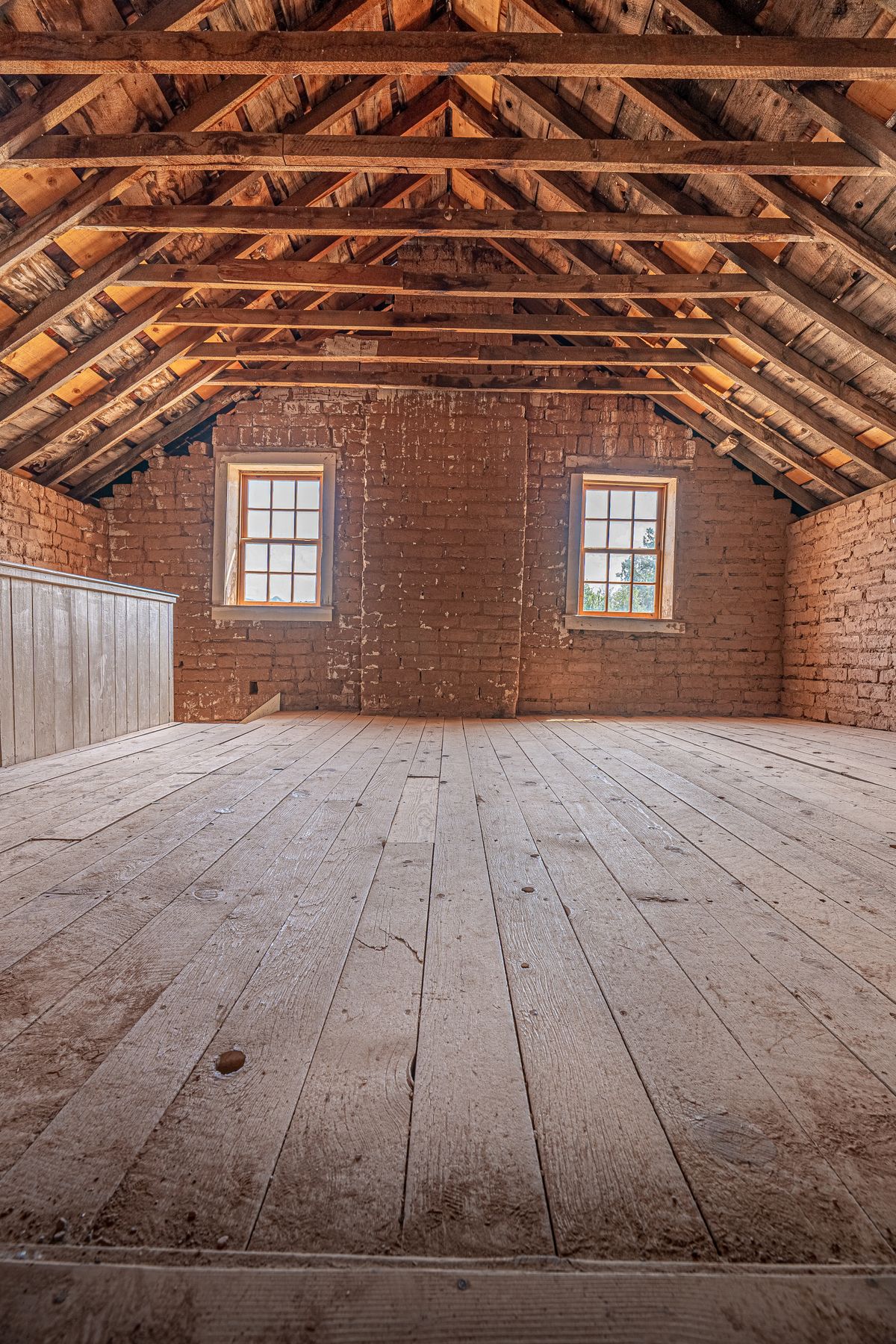
Most leaks start at a transition — a valley, a vent, a skylight, a wall — not in the middle of the shingle field. We start in the attic, trace the water to its real source, and fix that. Serving Athens and Clarke County.
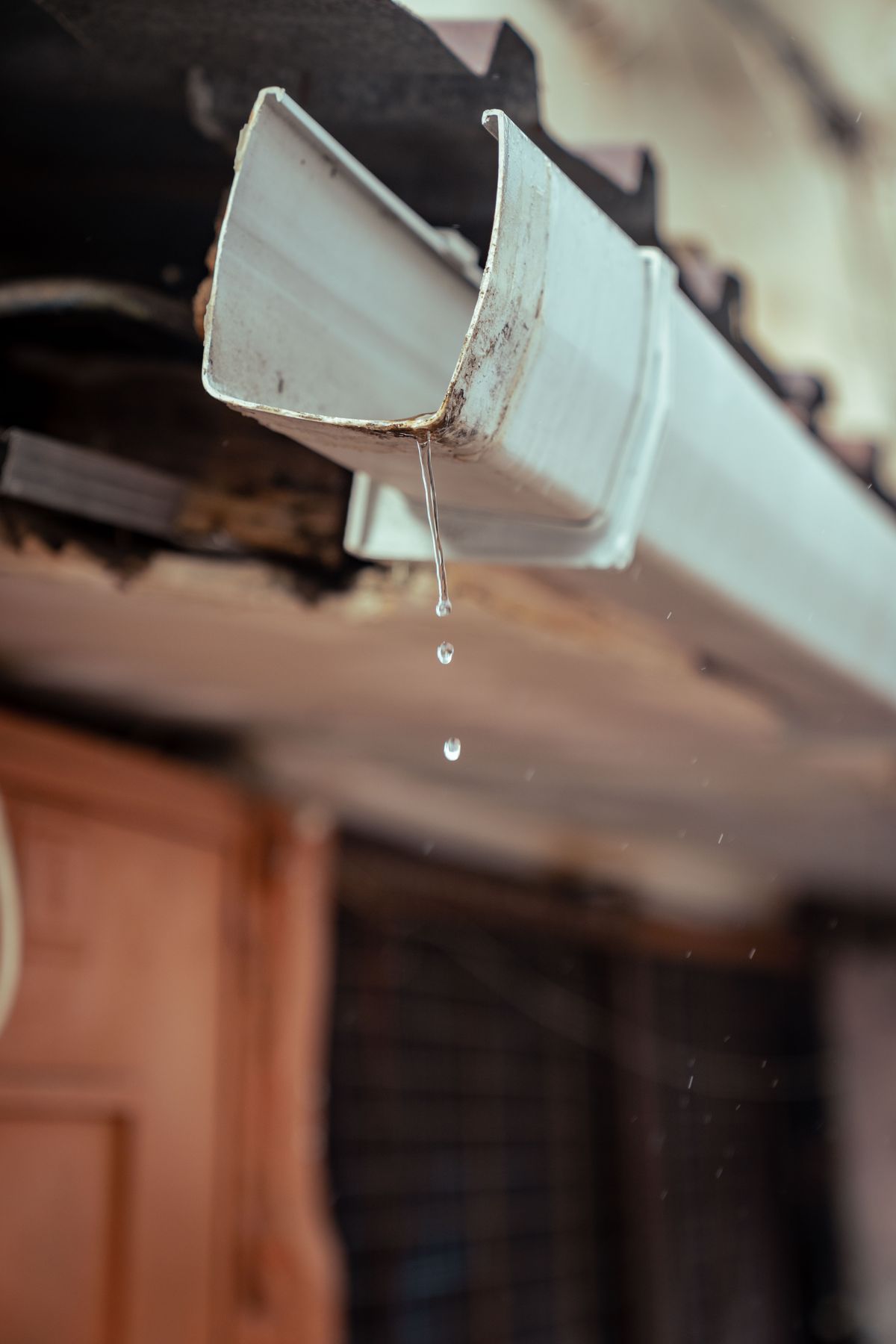
Active leak? Contain the water, photo-document the stain, and call now — emergency tarping stops the water first; the permanent fix waits for a dry day.
Fast emergency work · Emergency response
Tonight · first hours
A leak at night feels like an emergency — and sometimes it is. In Athens, the heavy tree canopy drops limbs that puncture shingles, and the puncture is often the source — so act on the first stain, not the tenth. Do these six things before anyone arrives. They cost nothing, they protect your home, and they make the repair faster.

Diagnosis · symptom to source
Water travels before it drips — the stain and the actual leak might not line up at all. Water runs along decking and rafters, sometimes several feet, before it finds a way inside. In Athens, start with the canopy: limbs puncture shingles, debris fills valleys, and granule wash after a storm is often the first sign a roof is aging. Start in the attic with a flashlight: the entry point is usually above and uphill from the stain.
| What you see | Most likely source | What we check first |
|---|---|---|
| Peeling paint around overhangs + soft spots on shingles | Early leak signs — water reaching the overhang / decking softening | Overhang flashing, decking firmness, shingle condition |
| Granules in gutters + stain | Shingle wear / end of life — granule wash after a storm is often the first sign a roof is aging | Granule loss at gutters and downspout outlets, curling, age of the roof |
| Black streaks on north-facing slopes | Algae growth (Gloeocapsa magma) — not a leak, but it holds moisture against the shingles | Algae-resistant shingle options on a re-roof, inspection to check what the streaks hide |
| Stain on the ceiling, directly under a roof valley full of tree debris | Valley liner / valley flashing failure — canopy debris holds water against the liner | Valley length, liner condition, clear the debris before judging the liner |
| Stain near a bathroom or kitchen vent | Cracked pipe boot (rubber collar fails after years in UV) | Pipe-boot collar, sealant around the vent — checked first on any slow leak with no visible stain |
| Stain near a chimney | Chimney flashing (step/counter flashing) or crown/mortar — common on early-1900s homes in Cobbham and Boulevard | Step + counter flashing, crown, mortar joints |
| Stain near a skylight | Skylight flashing / curb seal | Skylight flashing, curb, sealant |
| Stain that grows only after wind-driven rain | Flashing / siding / wall transition — wind-driven entry in spring and fall thunderstorms | Flashing at roof-to-wall transitions, siding joints |
| Stain after long, steady rain | Worn shingles, exposed fasteners, deteriorated sealant, low-slope ponding | Shingle field, fasteners, sealant, low-slope areas |
| Musty smell, no visible stain | Hidden moisture in attic insulation — hot summers demand attic ventilation | Attic: wet insulation, dark rafter streaks, rusted nails, ventilation |
| Dripping noise in the ceiling | Active leak — water travelling along decking/rafters; the stain may be feet from the entry | Attic-first tracing with a flashlight + moisture meter |
| Stain on a cold morning with no rain | Suspect condensation, not a leak | Attic moisture / ventilation check first |
| Stain that appears only in one wind direction | “Ghost leak” — wind-direction-dependent entry | Entry points on the windward side, flashing in that direction |
A water stain on the ceiling but a roof that looks fine from the ground is normal in Athens. Most leaks start at a transition — a valley full of tree debris, a vent, a skylight, a wall — not in the middle of the shingle field. And the canopy does its damage quietly: a limb punctures a shingle in a spring storm, and the stain shows up weeks later. A roof that is only looked at when it leaks is a roof that leaks twice — a spring and fall look at the roof catches it before the stain does.

Our process

Repair or replace · the rule
No sales pressure — just condition thresholds. Here is the rule we use on every leak call in Athens — from an early-1900s home in Cobbham or Boulevard to a UGA-area rental.
A photo-documented inspection gives the answer — an honest recommendation in writing: repair, replacement, or an insurance claim. A repair is not pushed when a replacement is the honest call, and a replacement is not pushed when a repair will do the job.
The clearest replace signal in Athens: granule wash after every storm plus two leaks after separate storms in a single year. The shingles are done — and patching one slope just moves the next leak to another slope.
What we fix
Six leak points cover almost every roof leak repair in Athens. Each one is fixed at the source — not patched over the stain.
Cracked rubber pipe boots and dried-out sealant around vents are a leading cause of small, slow leaks that go unnoticed for months in Athens.
Valleys carry more water than any other part of a sloped roof, and a failed valley liner is one of the most common repair calls — tree debris makes it worse.
Cracked rubber collars after years of UV — checked first on any slow leak with no visible stain.
Flashing and curb seals, with a condensation check on cold mornings.
Wind-lifted or cracked caps at the ridge — resecured or replaced.
Missing, cracked or curling shingles — 3-tab and architectural — replaced and blended to match.
Local · Athens, GA
Athens leaks have a local shape. The heavy tree canopy drops limbs that puncture shingles and traps moisture in valleys, and granule wash after a storm is often the first sign a roof is aging — look for granules collecting in gutters and at downspout outlets. Black streaks on north-facing slopes are algae, Gloeocapsa magma, thriving in Athens' humid subtropical climate: not a leak by itself, but a sign the roof is holding moisture.
The Athens workflow nobody addresses is the rental one. In UGA-area rentals the tenant spots the stain, the property manager needs photos and a written price breakdown, and the landlord authorises the work — three people, one leak. We photo-document the leak and the fix so the tenant, the manager and the landlord all see the same thing. And on the early-1900s homes in Cobbham and Boulevard, the leak is usually a flashing or a valley that has outlived the shingles around it.

The small jobs inside a leak repair
Most leaks are fixed by one of these jobs — not by a new roof. Each one is a section of the leak repair, not a separate service page. In Athens, tree canopy and old flashing shape every one of them.
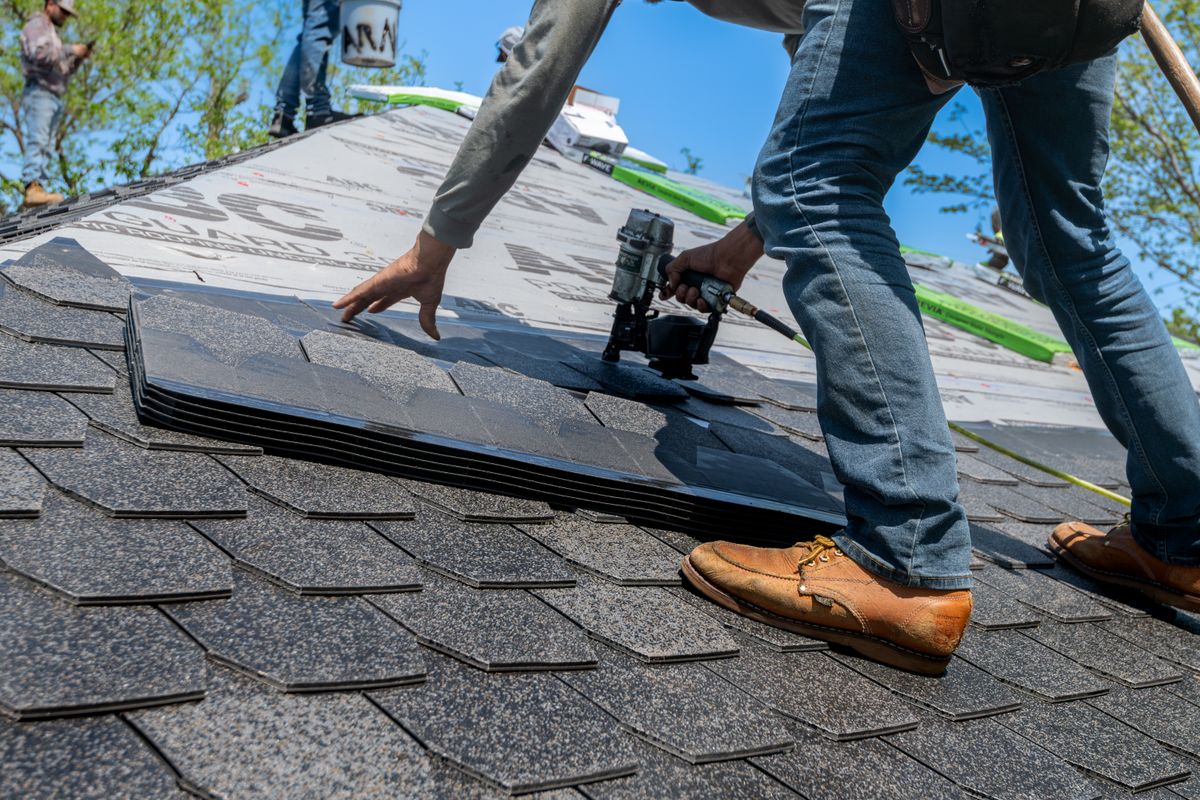
A patch is the right call when the damage is small: a few damaged shingles, a small leak just starting, a puncture where a limb came down, or compromised flashing at one point. We patch the shingles — 3-tab and architectural — and blend the new ones into the existing field, so a patch does not stick out like a fresh scar on an older roof. Most single-point repairs, like a flashing fix or a shingle patch, are completed within a couple of hours once we are on the roof. This is residential shingle patching — 3-tab and architectural, the two shingle types most Athens roofs carry. Flat-roof membrane patching is a different, commercial scope.
Ridge caps take the brunt of wind uplift — they sit at the highest, most exposed point of the roof, and Athens' spring and fall thunderstorms bring straight-line winds that lift them. A loose or cracked ridge cap is often the first domino in a bigger leak. We resecure or replace the affected caps, and where the ridge line itself has failed we rebuild it to shed water properly instead of just resealing over a failing cap.
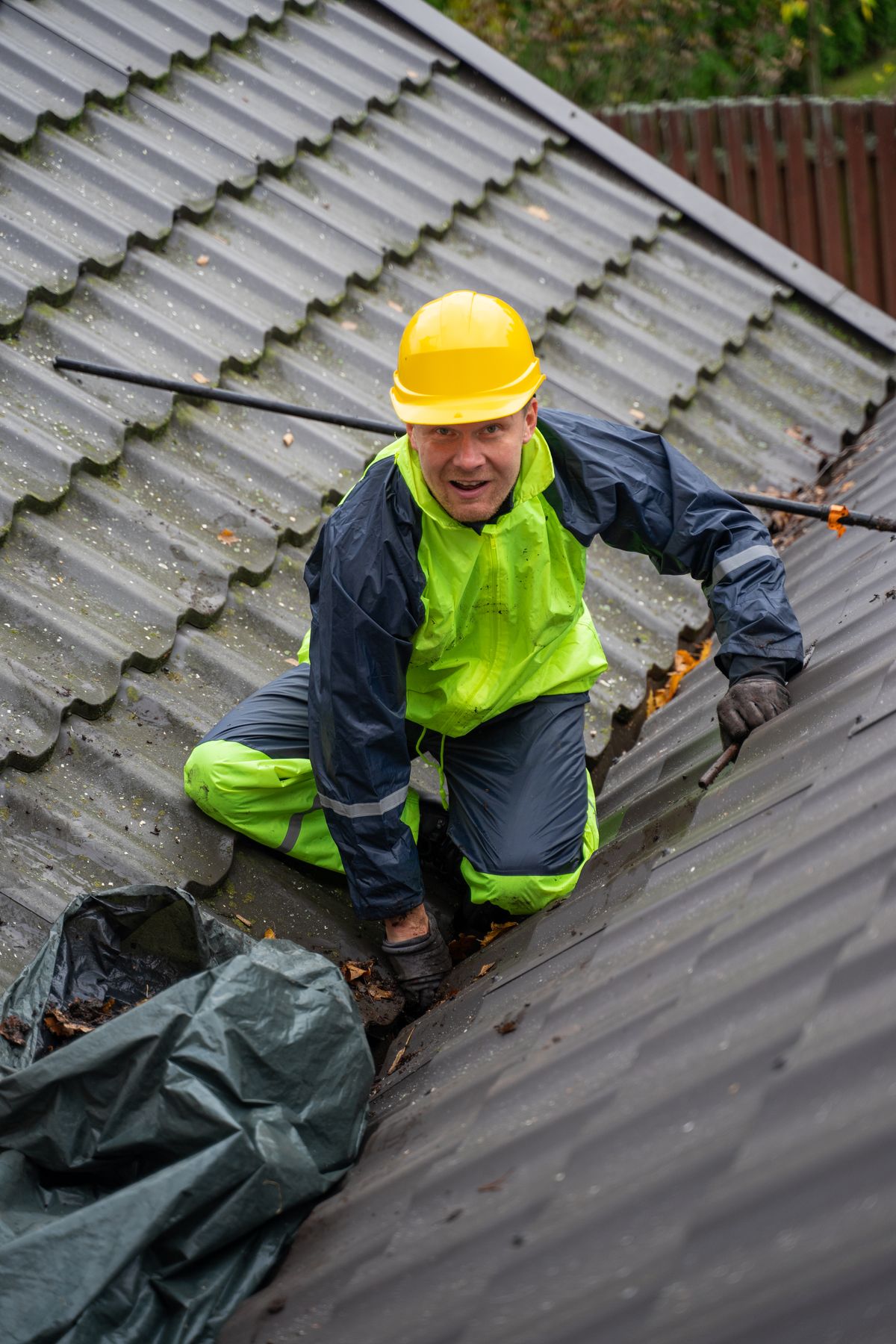
Valleys carry more water than any other part of a sloped roof, and a failed valley liner is one of the most common repair calls in Athens — the heavy tree canopy drops limbs and fills valleys with debris, and debris sitting in a valley holds water against the liner. A valley leak is fixed by clearing the debris and re-flashing the valley — and by replacing the membrane underneath, not just the metal on top. On a canopy-heavy roof, the clearing matters as much as the flashing.
Cracked rubber pipe boots and dried-out sealant around vents are a leading cause of small, slow leaks that go unnoticed for months in Athens — and a cracked boot is the first thing we check on any slow leak with no visible stain. The rubber collar fails after years in UV. The fix is a new boot and fresh sealant — a small job, but only if the collar is actually the source, which is why we trace first, and why a slow leak with no visible stain gets the boot checked before anything else.
Where a roof meets a wall, step flashing and counter-flashing keep water out. When that flashing separates or corrodes, wind-driven rain gets in at the wall — and the stain shows up inside, often well away from the wall itself. On Athens' early-1900s homes the wall flashing has often outlived the shingles around it, so a leak at a wall is checked at the flashing first. We reseal where the metal is sound and re-flash where it has failed — on an early-1900s home, the flashing is usually the oldest part of the roof, so it gets checked first.
A stain near a skylight usually means the skylight flashing or the curb seal has failed — not the skylight glass. In a UGA rental the tenant reports the stain and we check the flashing, the curb and the sealant — with photos for the property manager, so the landlord sees the same thing the tenant saw. We check condensation too: a skylight can sweat on a cold morning without any leak at all.
Leaks at the chimney are usually the flashing. Chimney Flashing Repair in Athens, GA is its own job — step flashing, counter-flashing and the cricket — with its own dedicated page. The chimney section is not repeated here, so the two pages never compete with each other.
Cost · factors only, never a price
No two leak repairs cost the same, and no honest roofer prices one without seeing the roof. These are the factors that move a price in Athens — see the full Georgia cost guide.
We price the job on site, after the inspection — call now and you will know the number before any work starts. In a UGA rental, the written price breakdown goes to the property manager and the landlord: the tenant reports the stain, the manager gets the photos and the price breakdown, and the landlord authorises the work.
Insurance · process only
It depends on what caused the leak and on your policy. Insurers generally treat sudden storm damage differently from gradual wear — a leak from straight-line wind or hail in a spring or fall thunderstorm is a different conversation from a leak caused by years of wear, like algae holding moisture against the shingles or a UV-cracked boot. Final coverage always depends on your specific policy terms, and we never promise an outcome.
What we do: photo-document the damage — the stain, the drip, any damaged items, the roof from the ground — and give you a written report you can share with your insurer. In a UGA rental, the report goes to the property manager and the landlord, so the tenant, the manager and the landlord all see the same photos. Read the Georgia insurance claims guide for the full process — what to document, sudden vs gradual, and how to talk to your insurer.

Questions, answered
Algae — Gloeocapsa magma — growing on north-facing slopes in Athens' humid subtropical climate. The black stripes are not a leak by themselves, but they hold moisture against the shingles and they are a sign the roof is aging. Algae-resistant shingles are the honest answer on a re-roof; on an existing roof, an inspection tells you whether the streaks are cosmetic or covering a real problem.
Twice a year as a general practice — spring and fall — and after any big storm. Spring catches winter damage before the summer storms; fall catches summer damage before winter. A roof that is only looked at when it leaks is a roof that leaks twice.
Call a professional. A wet roof is dangerous to climb, and a DIY patch usually covers the stain, not the source — the water keeps coming in at the same failed flashing and the next stain appears somewhere else. A professional traces the leak to its entry point, fixes the source, and photo-documents the work.
Attic-first: we look for wet insulation, dark spots or drips on rafters, mould smells and soft spots, then trace with a moisture meter. Where the entry point still is not obvious, thermal imaging and a controlled hose test narrow it down. The goal is to find the leak without opening up the roof to look for it.
Most single-point repairs — a flashing fix or a shingle patch — are completed within a couple of hours once we are on the roof. Bigger jobs, or a roof that needs decking work, take longer. We tell you the timing after the inspection, not before.
We document the damage with photos and a written report you can share with your insurer. We do not meet adjusters or negotiate claims on your behalf, and we never promise an insurance outcome — final coverage always depends on your policy terms. The full process is in our Georgia insurance claims guide.
The first signs: water spots on the ceiling or walls, a musty smell in the attic, peeling paint around overhangs, granules collecting in gutters, wet insulation or dark spots on rafters, and soft spots on the shingles. A stain that grows only after wind-driven rain points to a flashing or wall transition; a stain after long steady rain points to worn shingles or sealant.
Areas served
We serve Athens and Clarke County — neighbourhoods including Five Points, Normaltown, Cobbham, Boulevard, Buena Vista, Beechwood, Cloverhurst, Woodlawn, Milledge Circle, UGA / downtown — and nearby towns including Watkinsville, Bishop, Winterville, Bogart, Statham, Winder, Jefferson, Commerce, Danielsville.
Athens ZIP codes served: 30601–30609 and 30612.
Roofing work in Athens is governed by the Athens-Clarke County Building Permits & Inspections Department. Whether your job needs a permit depends on the scope; ask us about the permit for your job.

Fast emergency work
We find the source, not just the stain — and we tell you honestly whether it is a repair or a replacement. No obligation, just a written price breakdown after the inspection.