Emergency roof leak repair · Hinesville, GA
Done right the first time — we find the source, not just the stain.
Most leaks start at a transition — a valley, a vent, a skylight, a wall — not in the middle of the shingle field. We start in the attic, trace the water to its real source, and fix that. Serving Hinesville and Liberty County.
Active leak? Contain the water, photo-document the stain, and call now — emergency tarping stops the water first; the permanent fix waits for a dry day.
Fast emergency work · Emergency response
Tonight · first hours
A leak at night feels like an emergency — and sometimes it is. In Hinesville, leaks start at the edges and ridge, where thunderstorm wind lifts shingles first — so check the edges from the ground and act on the first stain. Do these six things before anyone arrives. They cost nothing, they protect your home, and they make the repair faster.

Diagnosis · symptom to source
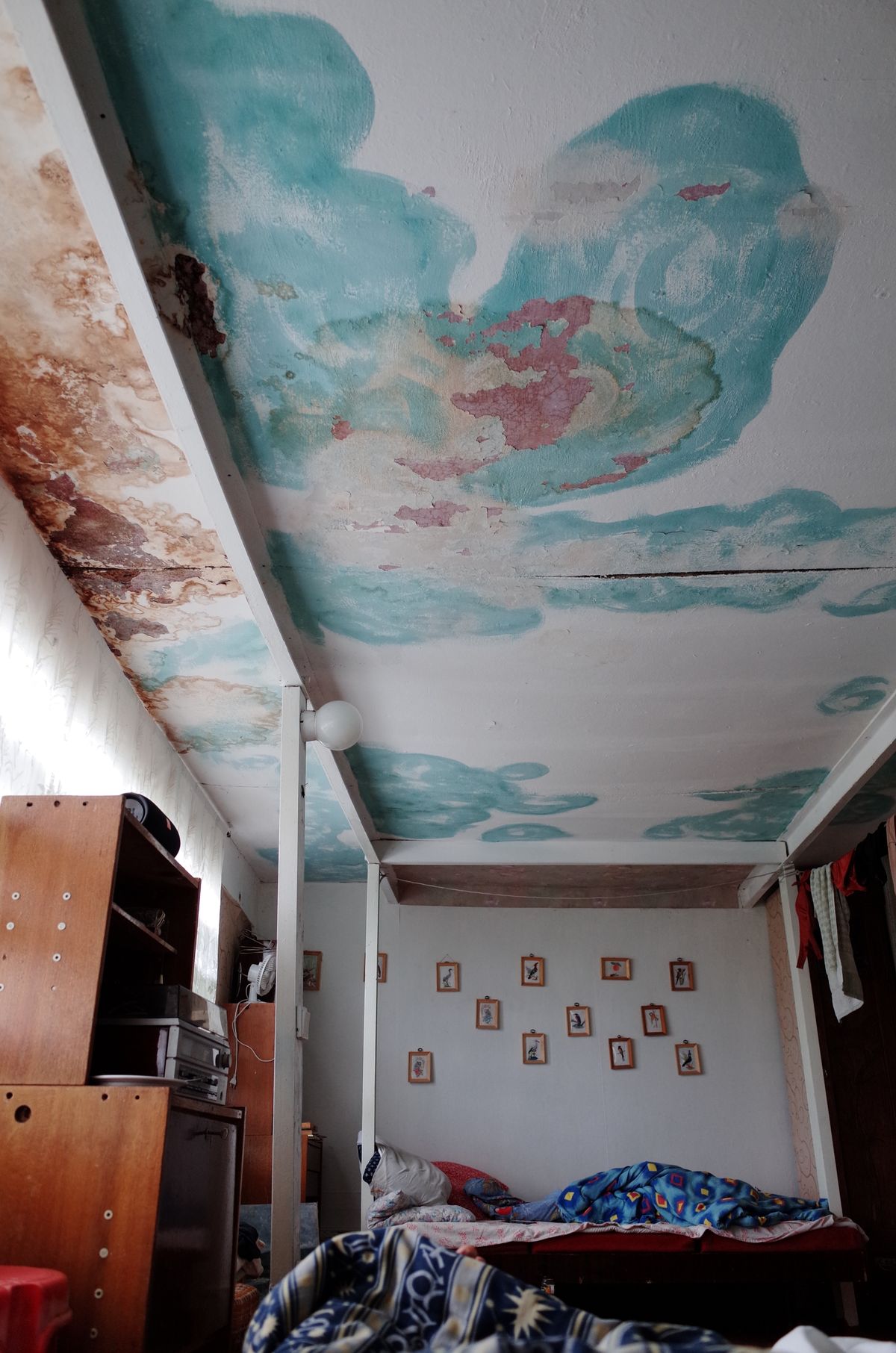
Water travels before it drips — the stain and the actual leak might not line up at all. Water runs along decking and rafters, sometimes several feet, before it finds a way inside. In Hinesville, start at the edges and ridge: thunderstorm wind lifts shingles there first, and a leak over one room can trace back to a rooftop detail far away. Start in the attic with a flashlight: the entry point is usually above and uphill from the stain.
| What you see | Most likely source | What we check first |
|---|---|---|
| Shingles lifting at the edges and ridge after wind | Wind-lifted shingles starting at edges and ridge | Edge and ridge fastening, seal strips, missing shingles |
| Stain on the ceiling, directly under a roof valley clogged with live-oak leaves and Spanish moss | Valley liner / valley flashing failure — debris holds water against the liner | Valley length, liner condition, clear the debris before judging the liner |
| Stain near a bathroom or kitchen vent | Cracked pipe boot (rubber collar fails after years in UV) | Pipe-boot collar, sealant around the vent |
| Stain near a chimney | Chimney flashing (step/counter flashing) or crown/mortar | Step + counter flashing, crown, mortar joints |
| Stain near a skylight | Skylight flashing / curb seal | Skylight flashing, curb, sealant |
| Stain that grows only after wind-driven rain | Flashing / siding / wall transition — wind-driven entry | Flashing at roof-to-wall transitions, siding joints |
| Stain after long, steady rain | Worn shingles, exposed fasteners, deteriorated sealant, low-slope ponding | Shingle field, fasteners, sealant, low-slope areas |
| Granules in gutters + stain | Shingle wear — granule loss and blisters from intense Southern sun and heat cycling | Shingle granule loss, blistering, curling, age of the roof |
| Musty smell, no visible stain | Hidden moisture in attic insulation | Attic: wet insulation, dark rafter streaks, rusted nails |
| Dripping noise in the ceiling | Active leak — water travelling along decking/rafters; the stain may be feet from the entry | Attic-first tracing with a flashlight + moisture meter |
| Stain on a cold morning with no rain | Suspect condensation, not a leak | Attic moisture / ventilation check first |
| Stain that appears only in one wind direction | “Ghost leak” — wind-direction-dependent entry | Entry points on the windward side, flashing in that direction |
A water stain on the ceiling but a roof that looks fine from the ground is normal in Hinesville. Most leaks start at a transition — a valley clogged with live-oak leaves, a vent, a skylight, a wall — not in the middle of the shingle field. And the stain inside is often well away from the entry point. Catch it early: a wind-lifted shingle fixed the week it lifts is a small job; the same shingle left through the next storm is a leak.

Our process

Repair or replace · the rule
No sales pressure — just condition thresholds. Here is the rule we use on every leak call in Hinesville — from a military rental near Fort Stewart to a family home in Liberty County.
A photo-documented inspection gives the answer. A repair is not pushed when a replacement is the honest call, and a replacement is not pushed when a repair will do the job.
The clearest replace signal in Hinesville: wind-lifted shingles across several slopes after a storm — not just one edge — plus granule loss and blistering from sun and heat cycling. And one Hinesville rule to know before you decide: re-roofs here require a permit, and old roofing must be removed to the deck if it is water-soaked or deteriorated, or if there are already two or more layers.
What we fix
Six leak points cover almost every roof leak repair in Hinesville. Each one is fixed at the source — not patched over the stain.
We trace every leak back to its actual entry point using a moisture meter and a visual flashing check — not a guess based on where the ceiling stain showed up.
Live-oak leaves and Spanish moss clog valleys and gutters; a clogged valley holds water against the liner until it fails.
Cracked rubber collars and dried sealant — a small, slow leak that goes unnoticed for months.
Flashing and curb seals, with a condensation check on cold mornings.
Wind-lifted caps at the ridge — where Hinesville leaks start. Resecured or replaced, and the ridge line rebuilt where it has failed.
Missing or wind-lifted shingles replaced and blended — a small repair caught early is the least expensive roofing work you can do.
Local · Hinesville, GA
Hinesville leaks are wind leaks first and age leaks second. Thunderstorm wind and hail are the main drivers: wind-lifted and missing shingles start at the edges and ridge, and granule loss and blisters come from intense Southern sun and heat cycling. Live-oak leaves and Spanish moss clog valleys and gutters, so a valley that never gets cleared holds water against the liner until it fails. Salt-corroded flashing is a secondary cause here — Hinesville is inland, and the inland framing comes first.
The Hinesville workflow nobody addresses is the military-rental one. Around Fort Stewart the tenant spots the stain, the landlord or property manager authorises the work, and everyone needs the same photos. We photo-document the leak, the source and the fix so the tenant, the manager and the landlord all see the same thing. And the permit question matters here: re-roofs in Hinesville require a permit, and old roofing must be removed to the deck if it is water-soaked or deteriorated, if it is wood shake, slate, clay, cement or asbestos-cement tile, or if there are already two or more layers.

The small jobs inside a leak repair
Most leaks are fixed by one of these jobs — not by a new roof. Each one is a section of the leak repair, not a separate service page. In Hinesville, wind, pine debris and sun shape every one of them.
A patch is the right call when the damage is small: a few wind-lifted or missing shingles, a small leak just starting, or compromised flashing at one point. We patch the shingles and blend the new ones into the existing field — a patch should not stick out like a fresh scar on an older roof. A small repair caught early is the smallest job on a roof. Most single-point repairs, like a flashing fix or a shingle patch, are completed within a couple of hours once we are on the roof. This is residential shingle patching on a wind-driven roof — not a flat-roof membrane job, which is a different, commercial scope.
Ridge caps take the brunt of wind uplift — they sit at the highest, most exposed point of the roof, and in Hinesville the ridge is where leaks start. A loose or cracked ridge cap is often the first domino in a bigger leak. We resecure or replace the affected caps, and where the ridge line itself has failed we rebuild it to shed water properly instead of just resealing over a failing cap.
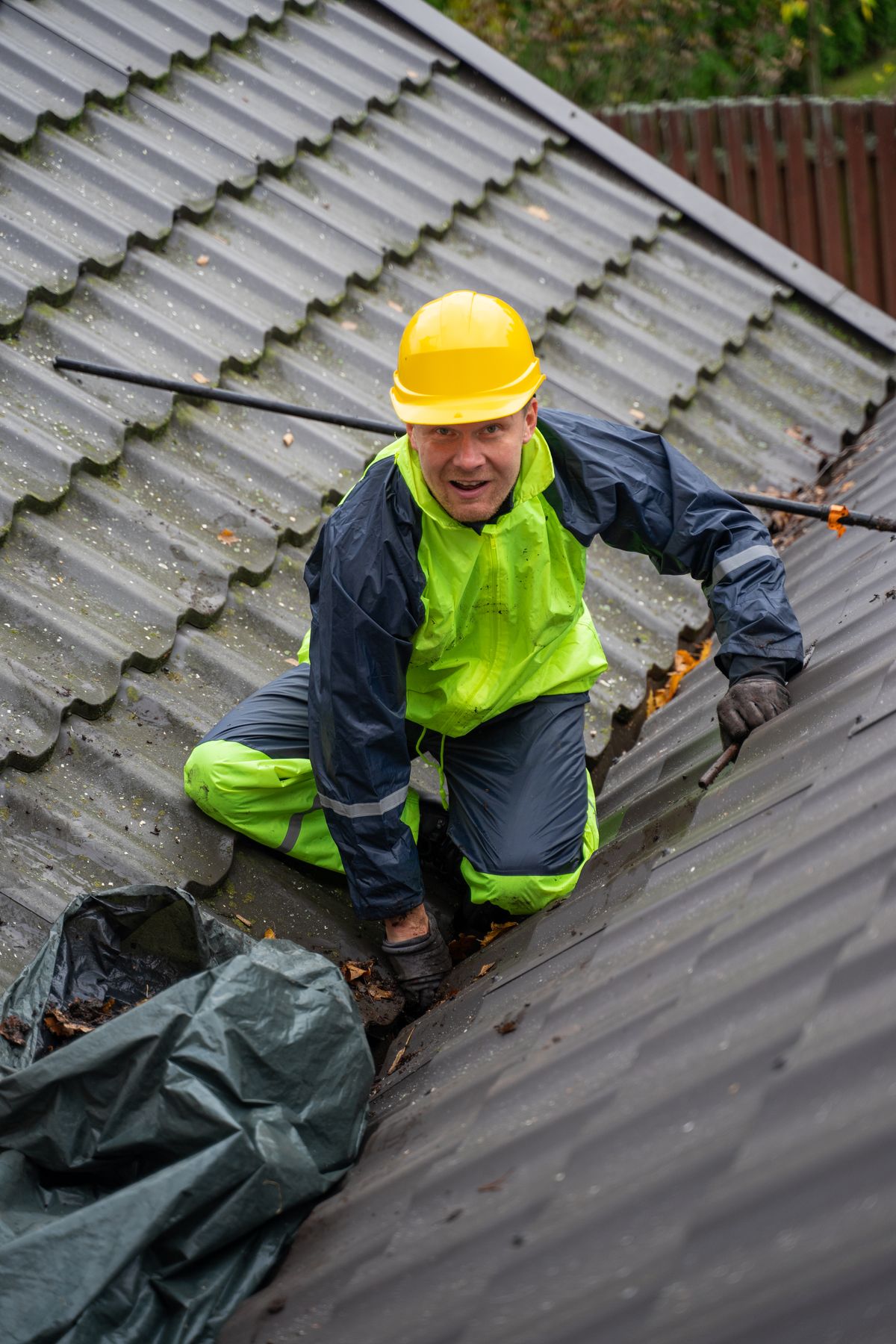
Valleys carry more water than any other part of a sloped roof, and a failed valley liner is one of the most common repair calls in Hinesville — because live-oak leaves and Spanish moss clog valleys and gutters, and a clogged valley holds water against the liner until it fails. A valley leak is fixed by clearing the debris and re-flashing the valley — and by replacing the membrane underneath, not just the metal on top.
Cracked rubber pipe boots and dried-out sealant around vents are a leading cause of small, slow leaks that go unnoticed for months in Hinesville. The rubber collar fails after years in UV and heat cycling. The fix is a new boot and fresh sealant — a small job, but only if the collar is actually the source, which is why we trace first instead of guessing at the stain.
Where a roof meets a wall, step flashing and counter-flashing keep water out. When that flashing separates or corrodes, wind-driven rain gets in at the wall — and the stain shows up inside, often well away from the wall itself. Flashing corrodes faster in coastal air, but Hinesville is inland — so corrosion is a secondary cause here, behind wind and debris. We reseal where the metal is sound and re-flash where it has failed — corrosion is checked too, but in Hinesville it runs behind wind and debris, not ahead of them.
A stain near a skylight usually means the skylight flashing or the curb seal has failed — not the skylight glass. In Hinesville we check for wind-driven entry as well as age: a skylight that only leaks in a driving thunderstorm is a flashing problem, and heat cycling dries the sealant out faster here. We check the flashing, the curb and the sealant, and we check condensation too: a skylight can sweat on a cold morning without any leak at all.
Leaks at the chimney are usually the flashing. Chimney Flashing Repair in Hinesville, GA is its own job — step flashing, counter-flashing and the cricket — with its own dedicated page. The chimney section is not repeated here, so the two pages never compete with each other.
Cost · factors only, never a price
No two leak repairs cost the same, and no honest roofer prices one without seeing the roof. These are the factors that move a price in Hinesville — see the full Georgia cost guide.
We price the job on site, after the inspection — call now and you will know the number before any work starts. In a military rental, the written price breakdown goes to the landlord or property manager: the tenant reports the stain, and the landlord authorises the work.
Insurance · process only
It depends on what caused the leak and on your policy. Insurers generally treat sudden storm damage differently from gradual wear — a leak from thunderstorm wind or hail is a different conversation from a leak caused by years of wear, like granule loss and blisters from sun and heat cycling. Final coverage always depends on your specific policy terms, and we never promise an outcome.
What we do: photo-document the damage — the stain, the drip, the lifted shingles at the edges and ridge from the ground, the attic — and give you a written report you can share with your insurer. In a military rental near Fort Stewart, the report goes to the landlord or property manager, so the tenant, the manager and the landlord all see the same photos. Read the Georgia insurance claims guide for the full process — what to document, sudden vs gradual, and how to talk to your insurer.

Questions, answered
Yes — re-roofs require a permit. Inside city limits the authority is the City of Hinesville Inspections Department (115 East M.L. King Jr. Drive); outside city limits it is the Liberty County Building and Licensing Department. Whether a repair needs a permit depends on the scope — ask us about the permit for your job.
Not in every case. Under the City's roofing permit rules, old roofing must be removed to the deck if it is water-soaked or deteriorated, if it is wood shake, slate, clay, cement or asbestos-cement tile, or if there are already two or more layers. A roof that looks fine from the street can still need a tear-off — the decking underneath decides.
It depends on how many leak points there are, the roof pitch and access, the shingle type and colour match, whether the decking underneath is sound, and whether it is storm damage or age wear. We price the job on site, after the inspection — call now. No price is published here because no honest price exists without seeing the roof.
It depends on the material and the roof's condition, not just its age. Asphalt shingles commonly last around 15–25 years in Georgia's heat and humidity; metal lasts longer and tile longer still. But a roof's real life is judged by its condition — curling, granule loss, soft decking and repeat leaks matter more than the year it was installed.
Yes — fast emergency work is what we lead with. In an emergency we tarp first to stop the water, then fix it properly on a dry day. Call now and we will tell you the earliest we can get there; we do not promise a time we cannot keep.
The tenant reports it to the landlord or property manager — with photos of the stain, the drip and any damaged items, and a note of when it started and what the weather was doing. The landlord authorises the work. We photo-document the leak, the source and the fix so the tenant, the manager and the landlord all see the same thing.
Use the rule: repair when the roof is young and the damage is in one area with a sound deck underneath; replace when the roof is aging and the damage is widespread, the deck is damaged or soft, or there have been two or more leaks after separate storms in a single year. When in doubt, a photo-documented inspection gives the answer.
Areas served
We serve Hinesville and Liberty County — neighbourhoods including Heritage Pointe, Griffin Park, Tranquil South, Fairington, Cherokee Rose Country Club, Cherokee Station, Independence Settlement, Sherwood Forest, Eagles Landing, Flemington Village, Grand Reserve, Liberty Village, Stonehenge, St. Catherine, Maybank Village, Crystal Lake Estates, Governors Quarters, Country Cove, Cypress Cove, Pineridge Plantation, Northwest Woods, Oak Crest, Parish Crossing — and nearby towns including Fort Stewart, Flemington, Allenhurst, Walthourville.
Hinesville ZIP codes served: 31313 (primary residential) and 31310 (PO Box).
Roofing work in Hinesville is governed by the City of Hinesville Inspections Department. Whether your job needs a permit depends on the scope; ask us about the permit for your job.

Fast emergency work
We find the source, not just the stain — and we tell you honestly whether it is a repair or a replacement. No obligation, just a written price breakdown after the inspection.