Call now: (470) 296-8083 · Emergency service available · Serving homeowners across Georgia
Georgia Roof Services Call now: (470) 296-8083

Emergency roof leak repair · Macon, GA

Roof Leak Repair in Macon, GA

Done right the first time — we find the source, not just the stain.

Most leaks start at a transition — a valley, a vent, a skylight, a wall — not in the middle of the shingle field. We start in the attic, trace the water to its real source, and fix that. Serving Macon and Bibb County.

Active leak? Contain the water, photo-document the stain, and call now — emergency tarping stops the water first; the permanent fix waits for a dry day.

Fast emergency work · Emergency response

A roofer in a hard hat and safety gear working on a roof
Honest recommendationRepair or replace, told plainly
Fast Emergency WorkTarping first, fix on a dry day
Serving MaconBibb County
Photo-Documented InspectionAttic-first, moisture meter
14
Georgia metros served
5
metros with dedicated pages live now
6
roofing services
2
helpful guides

Tonight · first hours

What to do tonight when your roof is leaking in Macon

A leak at night feels like an emergency — and sometimes it is. In Macon, heavy rain and thunderstorms from June through August can turn a small defect into an active leak fast — so do not wait for morning to act. Do these six things before anyone arrives. They cost nothing, they protect your home, and they make the repair faster.

  1. Put a bucket or container under the drip. Move furniture, electronics and valuables away from the water. Cover larger items with waterproof sheets.
  2. If the ceiling is bulging with water, do not puncture it unless you understand the risk — call first. A bulging ceiling can release a lot of water at once.
  3. Photo-document everything: the stain, the drip, any damaged items, and the outside of the roof from the ground — then photograph the same spots again a day later. Whether the stain is growing tells us how fast the water is moving. These photos help the inspection — and your records if you talk to your insurer.
  4. Do not climb onto a wet roof, and do not climb a ladder in the rain to tarp it yourself. Stay on the ground, contain the water inside, and call for emergency tarping.
  5. If water is coming in fast, contain it and call now. Emergency tarping stops the water first; the permanent fix waits for a dry day.
  6. Note when it started and what the weather was doing — and where the stain sits. Near a brick wall or a window, or under the roof field? In Macon the first question is often 'is it even the roof?' — a stain near brick or a window can be a brick, siding or window leak, not a roof leak at all.
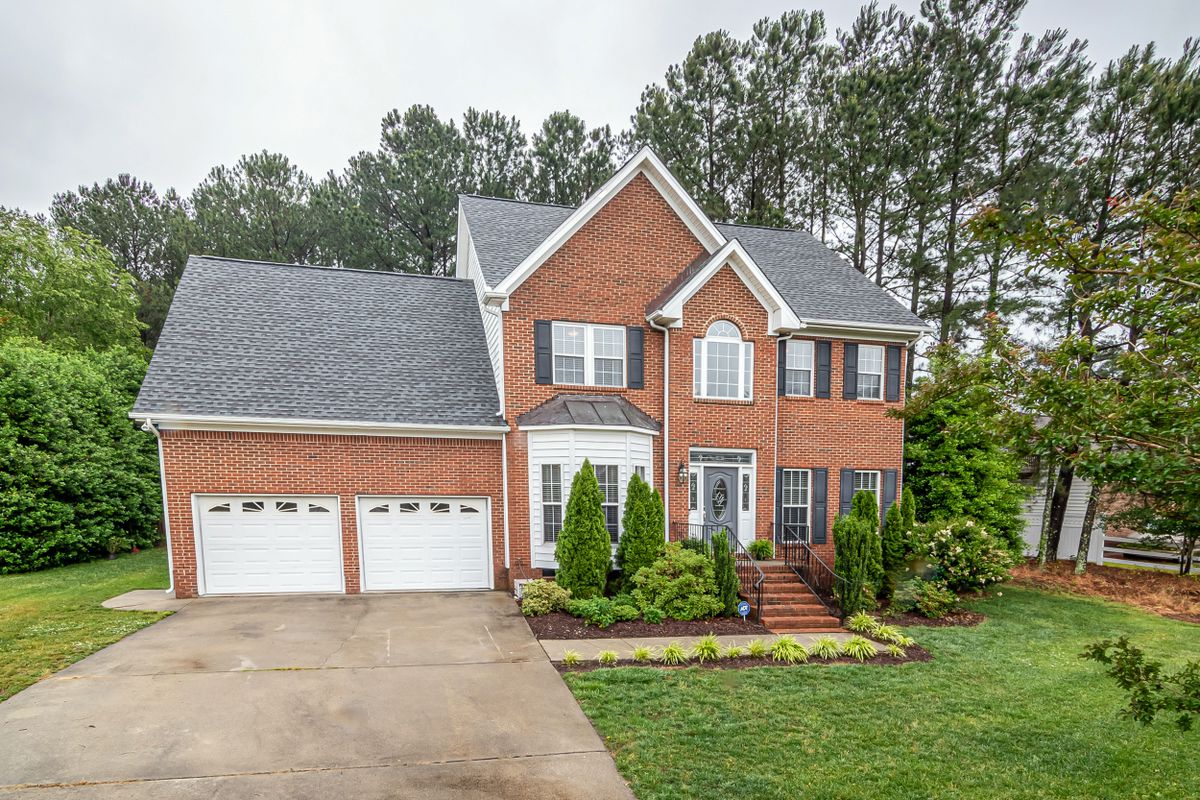
A suburban house with a shingle roof

Diagnosis · symptom to source

How to find a roof leak in Macon

Water travels before it drips — the stain and the actual leak might not line up at all. Water runs along decking and rafters, sometimes several feet, before it finds a way inside. In Macon the first question is not always 'how bad is it' — it is 'is it even the roof?' A stain near a brick wall or a window can be a brick, siding or window leak, not a roof leak at all. Start in the attic with a flashlight: the entry point is usually above and uphill from the stain.

What you seeMost likely sourceWhat we check first
Stain near a brick wall or window, not under the roof fieldMay not be the roof at all — brick, siding or window leak“Is it even the roof?” triage — roof vs brick/siding/window vs condensation
Stain on a cold morning with no rainSuspect condensation, not a leakAttic moisture / ventilation check first
Stain on the ceiling, directly under a roof valleyValley liner / valley flashing failure — long, low slopes hold water against a failed linerValley length, liner condition, debris in the valley
Stain near a bathroom or kitchen ventCracked pipe boot, nail pop or starter edge — the classic small Macon leakPipe-boot collar, sealant around the vent, nail pops, starter edge
Stain near a chimneyChimney flashing (step/counter flashing) or crown/mortarStep + counter flashing, crown, mortar joints
Stain near a skylightSkylight flashing / curb sealSkylight flashing, curb, sealant — condensation check before any flashing is touched
Stain that grows only after wind-driven rainFlashing / siding / wall transition — wind-driven entryFlashing at roof-to-wall transitions, siding joints
Stain after long, steady rainWorn shingles, exposed fasteners, deteriorated sealant, low-slope pondingShingle field, fasteners, sealant, low-slope areas
Musty smell, no visible stainHidden moisture in attic insulationAttic: wet insulation, dark rafter streaks, rusted nails
Dripping noise in the ceilingActive leak — water travelling along decking/rafters; the stain may be feet from the entryAttic-first tracing with a flashlight + moisture meter
Granules in gutters + stainShingle wear / end of lifeShingle granule loss, curling, age of the roof
Stain that appears only in one wind direction“Ghost leak” — wind-direction-dependent entryEntry points on the windward side, flashing in that direction

A water stain on the ceiling but a roof that looks fine from the ground is normal in Macon. Most leaks start at a transition — a valley, a vent, a skylight, a wall — not in the middle of the shingle field. And on Macon's long, low Ranch and Craftsman slopes, water sits against a failed flashing longer than it would on a steep roof, so a small defect becomes a stain in a single summer storm. We check the roof first — and we say so plainly when the water is coming from somewhere else. A roofer who patches a roof that was never the problem has not fixed anything.

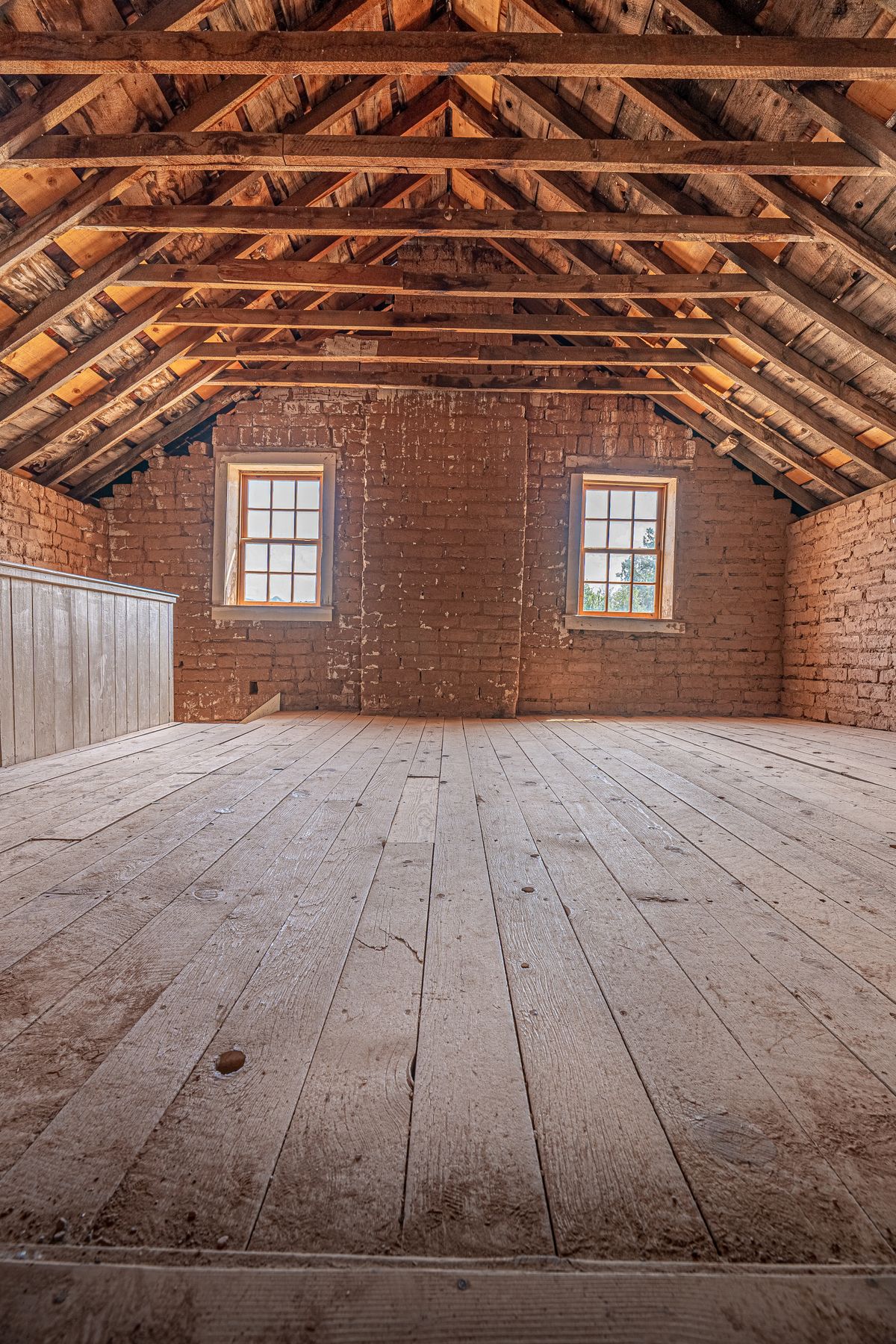
An empty attic with exposed wooden beams

Our process

How we fix a roof leak in Macon

  1. Inspect. Attic first with a flashlight, then the roof surface. We look at the stain, the decking above it, and the flashing around it.
  2. Trace. A moisture meter and, where needed, a controlled water test find the entry point. We trace the water back to its real source, not the stain.
  3. Written breakdown. What is wrong, what the fix is, and what moves the price. You approve it before work starts. Call now.
  4. Fix the source. The flashing, boot, valley or shingles that actually failed — not a patch over the stain.
  5. Water test + photos. We check the fix holds and photo-document the work, so you can see what was done.
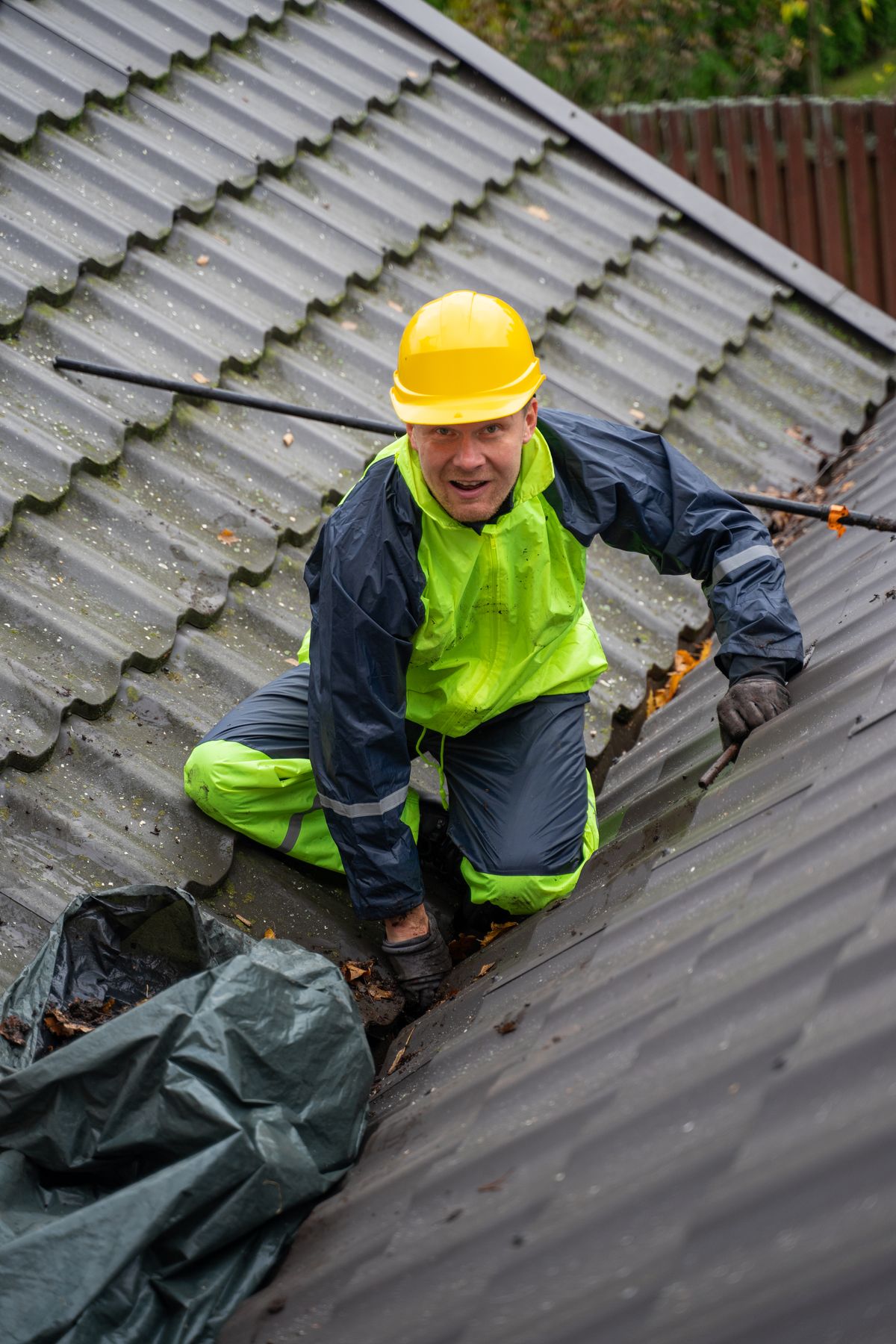
A roofer in protective gear holding a hammer

Repair or replace · the rule

Can a roof leak be repaired, or does the whole roof need replacing in Macon?

No sales pressure — just condition thresholds. Here is the rule we use on every leak call in Macon. Condition and source determine the scope — not the size of the stain.

Repair when

  • The roof is under roughly 15 years old, and
  • the damage is localised — one area, one source, like one vent or one valley, and
  • the deck underneath is sound, and
  • the leaks are isolated events, not a pattern.

Replace when

  • The roof is aging and the damage is widespread — several spots, multiple leaks, or
  • the deck is damaged or soft, or
  • there have been two or more leaks after separate storms in a single year — the underlayment and field shingles have aged past spot repair, or
  • shingles are curling or losing granules across the whole roof.

Inspect first when in doubt

A photo-documented inspection gives the answer. A repair is not pushed when a replacement is the honest call, and a replacement is not pushed when a repair will do the job.

The clearest replace signal in Macon: two or more leaks after separate storms in a single year — on a long, low Ranch or Craftsman slope where water sits against a failed flashing longer than it would on a steep roof. But a leak that keeps coming back at the same flashing does not automatically mean replacement — it usually means the first repair treated the symptom, not the source. That is when a proper trace matters more than a new roof.

Repair or replace, told plainly.

What we fix

What we fix in Macon

Six leak points cover almost every roof leak repair in Macon. Each one is fixed at the source — not patched over the stain.

Flashing at chimneys, valleys, vents and skylights

We don't just find the drip; we find the entry point — most Macon leaks start at a transition, and the water travels far from the original point of entry before showing up on your ceiling.

Valleys

Long, low Ranch and Craftsman slopes hold water against a failed valley liner — cleared, re-lined and re-flashed.

Pipe boots and vents

Cracked rubber collars and dried sealant — a leak at a vent, a nail pop or a starter edge is the classic small Macon leak.

Skylights

Flashing and curb seals, with a condensation check before any flashing is touched.

Ridge caps

Wind-lifted or cracked caps resecured or replaced at the highest point of the roof.

Shingle patches

Missing, cracked or curling shingles replaced and blended to match the existing field.

Local · Macon, GA

Macon roofs: summer storms, Ranch and Craftsman slopes — and “is it even the roof?”

Macon's leak pattern is set by its summers. Heavy rain and thunderstorms from June through August can turn a small defect into an active leak quickly, and humid weather can turn a small opening into interior staining fast. Ranch and Craftsman roofs — the bulk of Bibb County housing — have long, low slopes where water sits against a failed flashing longer than it would on a steep roof, and where a valley full of debris becomes a leak in a single storm.

The Macon question nobody had built a page for is the triage question: is it even the roof? A stain near a brick wall or a window can be a brick, siding or window leak, not a roof leak at all — and a stain on a cold morning with no rain is often condensation. We check the roof first, and we say so plainly when the water is coming from somewhere else. A roofer who patches a roof that was never the problem has not fixed anything.

A homeowner in front of her house

The small jobs inside a leak repair

Roof patch repair, ridge caps and flashing in Macon

Most leaks are fixed by one of these jobs — not by a new roof. Each one is a section of the leak repair, not a separate service page. In Macon, long low slopes and the 'is it even the roof?' question shape every one of them.

Roof patch repair

A patch is the right call when the damage is small: a few damaged shingles, a small leak just starting, or compromised flashing at one point. We patch the shingles and blend the new ones into the existing field — a patch should not stick out like a fresh scar on an older roof, and on a long, low Ranch slope it has to shed water the same way the field does. Most single-point repairs, like a flashing fix or a shingle patch, are completed within a couple of hours once we are on the roof. This is residential shingle patching — the Ranch and Craftsman roofs that make up most of Bibb County housing. Flat-roof membrane patching is a different, commercial scope.

Ridge cap repair

Ridge caps take the brunt of wind uplift — they sit at the highest, most exposed point of the roof, and a June–August thunderstorm tests them hardest. A loose or cracked ridge cap is often the first domino in a bigger leak. We resecure or replace the affected caps, and where the ridge line itself has failed we rebuild it to shed water properly instead of just resealing over a failing cap.

Valley flashing

Valleys carry more water than any other part of a sloped roof, and a failed valley liner is one of the most common repair calls in Macon — because Ranch and Craftsman roofs have long, low slopes that hold water against a failed liner. A valley leak is fixed by clearing the debris and re-flashing the valley — and by replacing the membrane underneath, not just the metal on top.

Vent and pipe-boot flashing

Cracked rubber pipe boots and dried-out sealant around vents are a leading cause of small, slow leaks that go unnoticed for months — and a leak at a vent, a nail pop or a starter edge is the classic small Macon leak. The rubber collar fails after years in UV. The fix is a new boot and fresh sealant — a small job, but only if the collar is actually the source. On a Macon roof we check the vent, the nail pops and the starter edge together, because the classic small leak here hides at any of the three.

Sidewall and headwall flashing

Where a roof meets a wall, step flashing and counter-flashing keep water out. In Macon this is also where the triage question lives: a stain near a brick wall can be a brick leak, not a roof leak at all. When the flashing separates or corrodes, wind-driven rain gets in at the wall — and the stain shows up inside, often well away from the wall itself. We check the wall and the flashing together, and we say so plainly when the water is coming from the brick, not the roof. Sound metal gets resealed; failed metal gets re-flashed — and a brick leak gets no roof patch at all.

Skylight flashing

A stain near a skylight usually means the skylight flashing or the curb seal has failed — not the skylight glass. In Macon we check condensation before any flashing is touched: a stain on a cold morning with no rain is often condensation, and no amount of new flashing fixes that. We check the flashing, the curb and the sealant, and the attic moisture first.

Leaks at the chimney are usually the flashing. Chimney Flashing Repair in Macon, GA is its own job — step flashing, counter-flashing and the cricket — with its own dedicated page. The chimney section is not repeated here, so the two pages never compete with each other.
Cost · factors only, never a price

How much does roof leak repair cost in Macon?

No two leak repairs cost the same, and no honest roofer prices one without seeing the roof. These are the factors that move a price in Macon — see the full Georgia cost guide.

We price the job on site, after the inspection — call now and you will know the number before any work starts.

Insurance · process only

Does homeowners insurance cover a roof leak?

It depends on what caused the leak and on your policy. Insurers generally treat sudden storm damage differently from gradual wear — a leak from a June–August thunderstorm is a different conversation from a leak caused by years of wear. And the triage question matters here too: if the water is coming from brick, siding or a window, it is not a roof leak at all, and a roof patch will not fix it. Final coverage always depends on your specific policy terms, and we never promise an outcome.

What we do: photo-document the damage — the stain, the drip, any damaged items, the roof from the ground, and the same spots again a day later — and give you a written report you can share with your insurer. Read the Georgia insurance claims guide for the full process — what to document, sudden vs gradual, and how to talk to your insurer.

Rain falling on a roof

Questions, answered

Frequently asked questions

How much does emergency roof repair cost in Macon, GA?

It depends on the severity, the materials involved, the roof pitch and access, whether the decking underneath is sound, and whether emergency tarping is needed first. A small leak at a vent is a different job from a storm-opened slope. We price the job on site, after the inspection — call now. No price is published here because no honest price exists without seeing the roof.

What actually counts as an emergency call?

Active water coming in, a ceiling bulging with water, or storm damage that has opened the roof. A small stain with no active drip is urgent but not an emergency — book it within days. What matters is not the size of the stain: a small stain can hide water saturating the structure behind the wall, so even a non-emergency leak should not wait weeks.

Is a leak always an emergency?

No. An active leak with water coming in is an emergency. A slow stain with no active drip is urgent — book it within days, not weeks — because humid weather can turn a small opening into interior staining fast. Either way, call: we will tell you honestly which one it is.

What should I photograph?

The stain and the drip, any damaged items, the outside of the roof from the ground, and the attic if it is safe to look. Photograph the same spots again a day later — whether the stain is growing tells us how fast the water is moving. These photos help the inspection and your records if you talk to your insurer.

How do I know if my roof has storm damage if it isn't leaking yet?

Do a ground-level self-check after a storm: missing, cracked or curling shingles, granules collecting in gutters and at downspout outlets, lifted flashing, and any new stain in the attic. No leak yet does not mean no damage — hail and wind bruise shingles first and leak later. A photo-documented inspection confirms it.

Does a recurring leak automatically mean full replacement?

Not automatically. Condition and source determine the scope: a leak that keeps coming back at the same flashing usually means the first repair treated the symptom, not the source. But two or more leaks after separate storms in a single year is a strong signal the underlayment and field shingles have aged past spot repair — that is when replacement becomes the honest call.

Should I try to tarp my own roof during a storm?

No. Roofs are slippery and dangerous when wet, and a ladder in the rain is worse. Stay on the ground, contain the water inside, and call for emergency tarping. The permanent fix waits for a dry day.

Areas served

Roof leak repair near me in Macon, GA

We serve Macon and Bibb County — neighbourhoods including Downtown Macon, Ingleside, Vineville, Shirley Hills, Bloomfield, North Macon, East Macon, South Macon — and nearby towns including Bibb County communities.

Macon ZIP codes served: 31201, 31204, 31206–31211, 31213, 31216, 31217, 31220.

Roofing work in Macon is governed by the Macon-Bibb County Building and Fire Safety Department. Whether your job needs a permit depends on the scope; ask us about the permit for your job.

Tell us about your leak

Four fields — no obligation. We call you back about the leak, not about a sales pitch.

Service area: Macon, GA. No address or email is published on this site — the phone line is how visits are booked.

A homeowner calling about a roof leak

Fast emergency work

Roof leaking in Macon? Call now.

We find the source, not just the stain — and we tell you honestly whether it is a repair or a replacement. No obligation, just a written price breakdown after the inspection.

Call now: (470) 296-8083

Call now: (470) 296-8083